

Blog
Water Heater Repair Cost Guide: Don’t Pay Too Much! (2026)

Water Heater Repair Costs: What Should You Really Pay?
A plain-English guide to common repairs, fair price ranges, and knowing when replacement makes more sense.
Call (817) 755-5621Short answer: many straightforward water heater repairs fall between $200 and $750, while complicated gas-control, tankless, or access-related work can cost more. A standard tank replacement commonly lands around $1,500 to $3,500+ in the Fort Worth area, depending on capacity, fuel type, code upgrades, location, and warranty.
Those are planning ranges—not a quote. The only reliable price comes after a technician identifies the failure and confirms what the installation requires. This guide will help you understand the estimate before you approve the work.
Average Water Heater Repair Costs in 2026
Labor, diagnostic fees, parts, permits, and after-hours service vary by company. Use these ranges to recognize the general size of a job, not as a guaranteed menu price.
| Repair or service | Planning range | Common clue |
|---|---|---|
| Diagnostic/service call | $89–$199 | Testing and diagnosis |
| Thermostat replacement | $180–$400 | Water too hot, cool, or inconsistent |
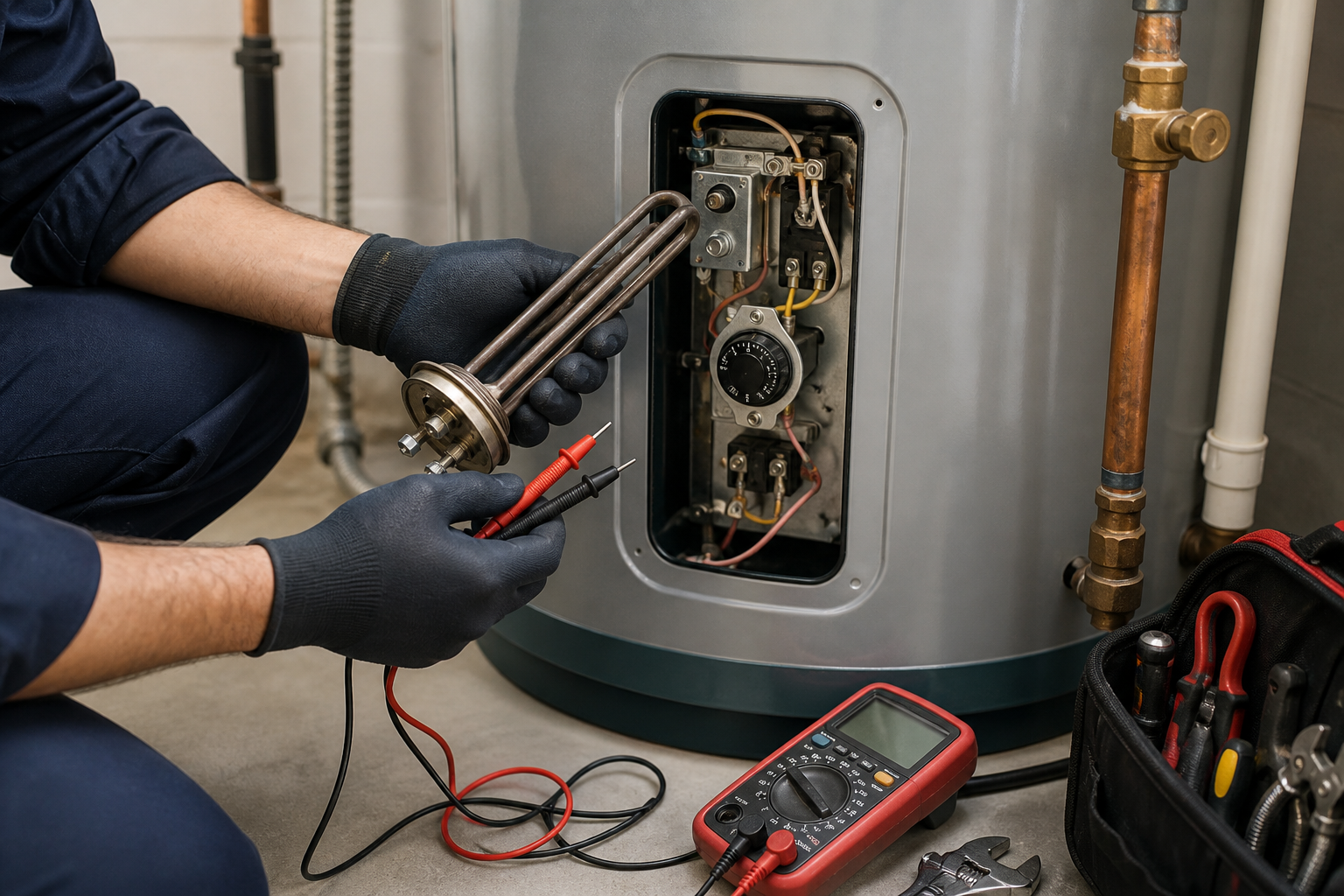
| Electric heating element | $250–$550 | No hot water or short supply |
| Thermocouple / flame sensor | $180–$450 | Pilot will not stay lit |
| Gas control valve | $400–$900 | Unit will not ignite or hold temperature |
| T&P relief valve | $200–$450 | Valve drips or malfunctions |
| Anode rod | $250–$650 | Odor or corrosion prevention |
| Tank flush / maintenance | $150–$350 | Popping or sediment buildup |
| Tankless descaling/service | $250–$600 | Low flow, temperature swings, error code |
Broad 2026 planning estimates. Actual Fort Worth pricing depends on diagnosis, equipment, accessibility, code requirements, and scheduling.
Common Problems—and What They May Mean
No hot water
On an electric unit, a tripped breaker, failed thermostat, or burned-out heating element may be responsible. On a gas unit, the problem may involve ignition, the thermocouple, gas supply, or control valve. Do not repeatedly reset a breaker or attempt gas repairs if the cause is unknown.
Hot water runs out too fast
A failed lower element, broken dip tube, heavy sediment, incorrect thermostat setting, or undersized tank can reduce usable hot water. Repair is often worthwhile on a younger tank; chronic capacity problems may call for a different system.
Popping, rumbling, or banging
Mineral deposits can trap water beneath sediment at the tank bottom. Flushing may help when the tank is still sound; severe buildup in an older tank can make replacement more sensible.
Rusty or smelly hot water
If the issue appears only on the hot side, the anode rod or tank may be corroding. A worn anode can sometimes be replaced. Rust from the tank body itself usually points toward replacement.
Water around the heater
A loose connection, drain valve, or relief valve may be repairable. A leaking tank shell is not. Shut off the water supply, avoid standing water near electrical equipment, and arrange prompt service.
Should You Repair or Replace?
Repair often makes sense when…
- The unit is relatively young.
- The tank itself is not leaking.
- The failure is an isolated component.
- The repair is comfortably below replacement cost.
- The heater has otherwise been reliable.
Replacement may be smarter when…
- The tank body leaks or is badly corroded.
- The unit is near the end of its service life.
- Repairs are becoming frequent.
- The estimate approaches 40–50% of replacement.
- You need better capacity or efficiency.
Age is useful, but it is not the only rule. A well-maintained 10-year-old unit with a simple thermostat failure may be worth repairing. A neglected 7-year-old tank with severe corrosion may not be. Ask for the diagnosed failure, full repair price, unit age, and expected remaining life.
What Changes the Final Price?
Fuel type and design
Electric tank units are generally simpler. Gas units involve combustion and venting. Tankless systems use sensors, heat exchangers, circuit boards, and manufacturer-specific parts.
Access and installation conditions
A heater in an open garage is easier to service than one in a tight attic or closet. Stairs, drain-pan limits, damaged shutoffs, venting corrections, and code upgrades add time and material.
Parts availability and warranty
Common parts may be available the same day. Specialty or discontinued parts can cost more. Check both manufacturer parts coverage and labor warranty before authorizing work.
Timing
Nights, weekends, and emergency visits may carry higher rates. If safely contained, standard-hours service may cost less. Active leaks and gas concerns should not wait.
How to Avoid Paying Too Much
- Request a written diagnosis. It should name the failed component and work.
- Compare total prices. Ask whether labor, parts, disposal, permits, and warranty are included.
- Do not choose on price alone. Licensing, insurance, safe workmanship, and code compliance matter.
- Ask about options. A reputable plumber should explain repair and replacement when both are reasonable.
- Maintain the system. Inspection, appropriate flushing, and anode checks can reduce surprises.
Tank vs. Tankless Replacement Costs
A conventional tank costs less upfront and is faster to replace. Tankless may last longer and avoid standby heat loss, but installation can require gas-line, venting, electrical, or condensate upgrades. Conversion often costs considerably more than like-for-like replacement.
Explore our water heater services, repair and maintenance, or installation and replacement pages.
Frequently Asked Questions
Is it worth repairing a 10-year-old water heater?
Sometimes. A minor repair on a sound, non-leaking tank can make sense. Major repairs, corrosion, or repeated failures usually favor replacement.
Can a leaking water heater be repaired?
Leaks from fittings, valves, or connections may be repairable. A leak through the storage tank normally requires replacement.
Why is labor more expensive than the part?
The price covers diagnosis, travel, safe shutdown, draining, testing, installation, leak checks, cleanup, overhead, and warranty—not just the component.
How long does a repair take?
Many common repairs take one to three hours once the correct part is available. Tankless diagnostics, tight access, or multiple failures may take longer.
How can I tell the heater's age?
Check the manufacturer label. The serial number usually encodes the manufacture date; the format varies by brand.
Get a Clear Water Heater Estimate in Fort Worth
No hot water, a noisy tank, or a leak? Plumber 24 Fort Worth can diagnose the problem and explain practical repair or replacement options.
Call +1 (817) 755-5621 Request Service OnlineLast updated August 2026. General consumer information, not a substitute for an on-site diagnosis. Never open gas or energized electrical components unless qualified.